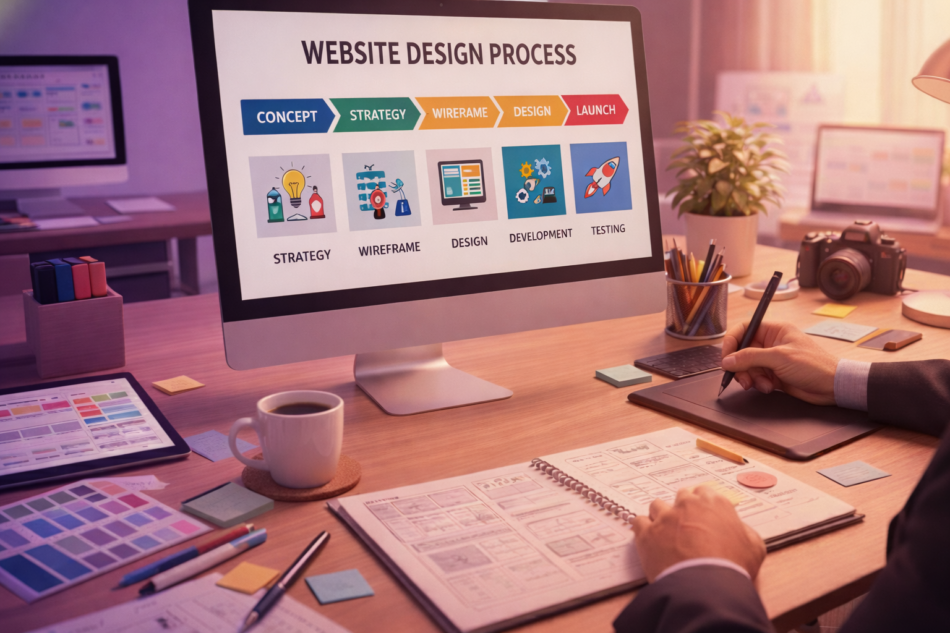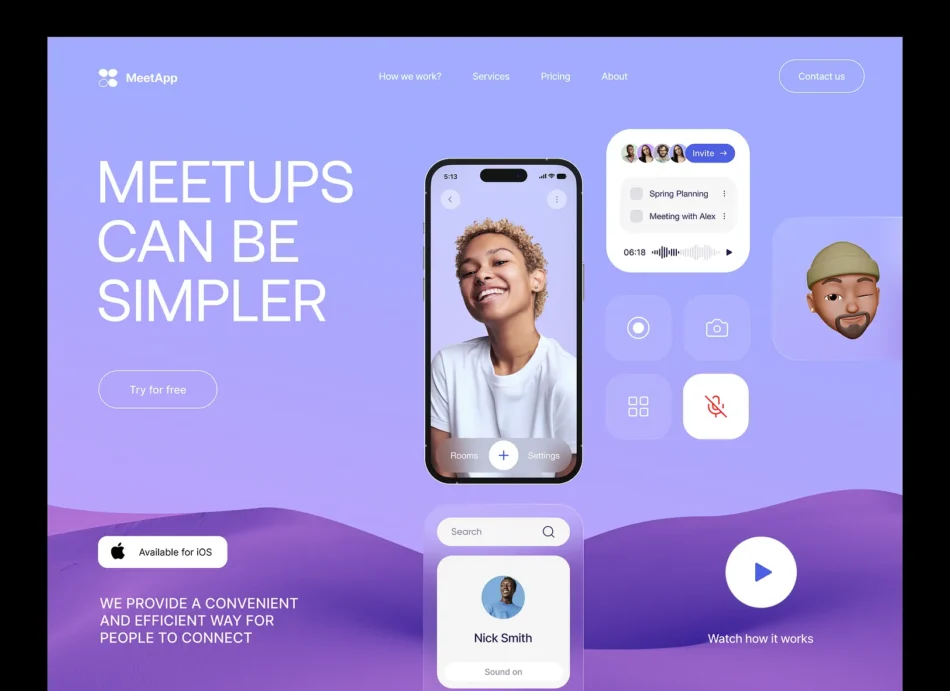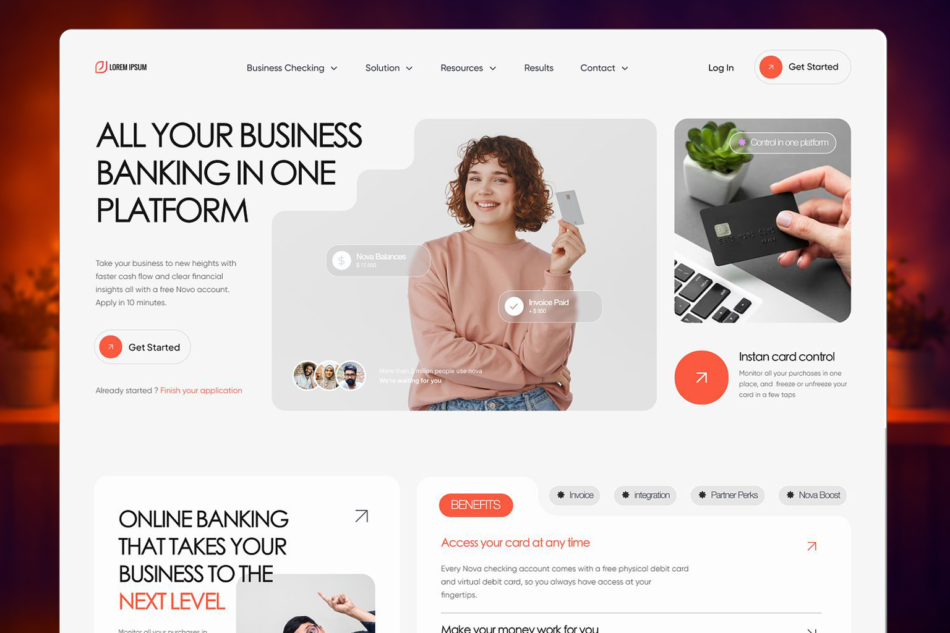
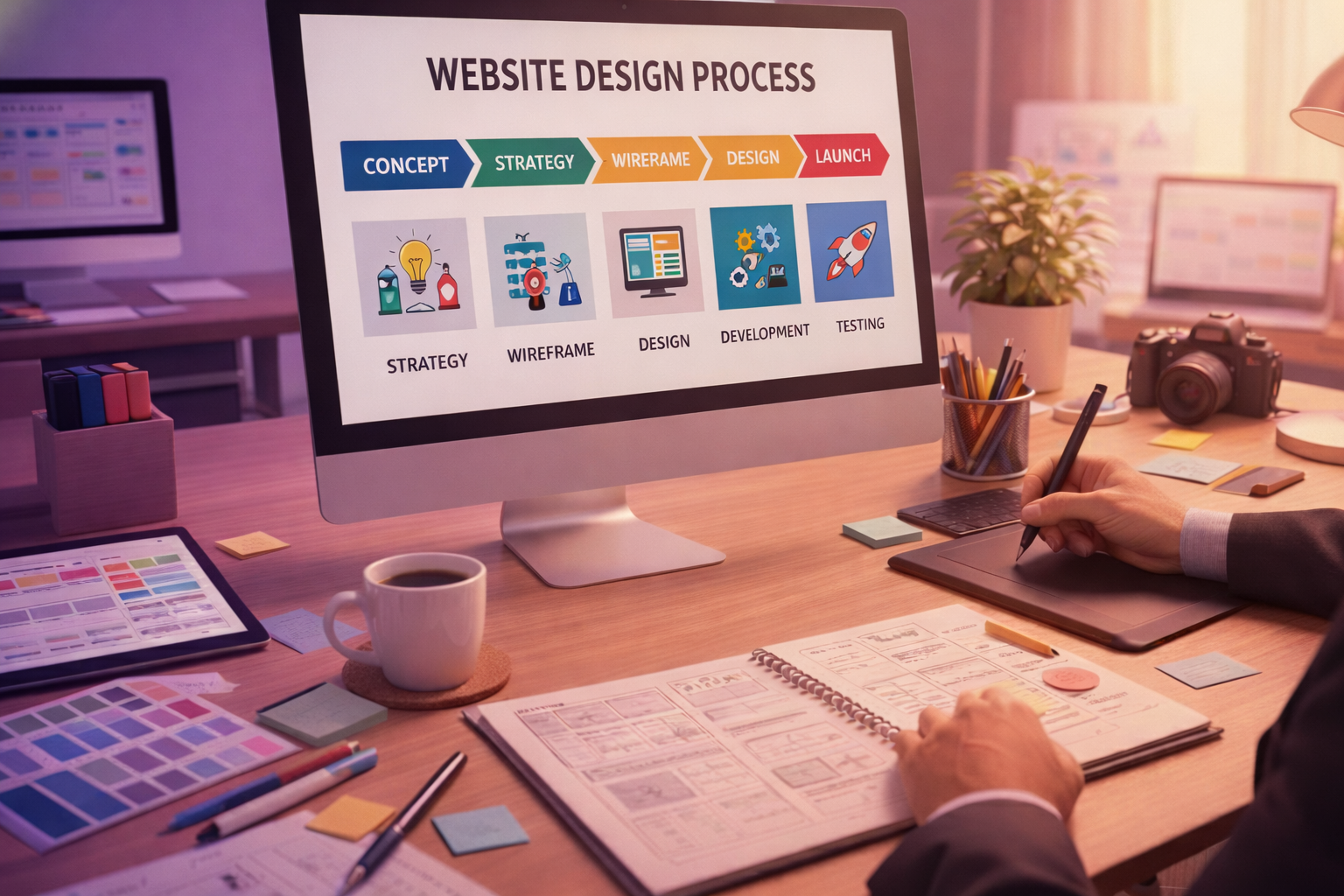
A high-performing website is not built randomly. It is the result of a clear, repeatable design process that balances business goals, user needs, and technical execution. Over the years, I have developed a proven website design workflow that consistently delivers clarity, usability, and measurable results from concept to launch.
“Simplicity is the ultimate sophistication.” — Leonardo da Vinci
Introduction
A website is often the first and most critical touchpoint between a business and its audience. Visitors decide within seconds whether to trust your brand or leave. A structured design process ensures clarity, reduces friction, and creates meaningful user experiences.
Discovery and Business Understanding
The process begins with understanding the business, its goals, and its audience. This phase focuses on identifying objectives, target users, competitors, and success metrics. Every design decision that follows is grounded in this clarity.
Strategy and Information Architecture
Once goals are defined, the website structure is planned. Sitemap creation, content hierarchy, and user flow design ensure visitors can navigate intuitively and reach key actions without confusion.
Wireframing and User Flow Design
Wireframes translate strategy into structure. They define layout, content placement, and conversion paths without visual distractions. This step allows usability to be validated before visual design begins.
Visual Design and Brand Alignment
At this stage, the website takes its visual form. Typography, color systems, spacing, and imagery are aligned with the brand identity. Simplicity and clarity remain the guiding principles to support focus and engagement.
Responsive and Mobile-First Design
Designs are optimized for all screen sizes with a mobile-first approach. Fast loading, readable content, and intuitive interactions ensure a consistent experience across devices.
Development and Performance Optimization
The approved design is developed using clean, scalable code. Performance, speed, and security are prioritized to deliver a smooth and reliable user experience.
Testing and Quality Assurance
Before launch, the website is tested across browsers and devices. Functionality, responsiveness, and performance checks ensure the site meets professional standards.
Launch and Continuous Improvement
After final approval, the website goes live with monitoring in place. Post-launch insights help refine and improve performance over time.
Conclusion
A proven website design process transforms complexity into clarity. By focusing on simplicity, structure, and user intent from concept to launch, businesses gain websites that perform, convert, and scale effectively.